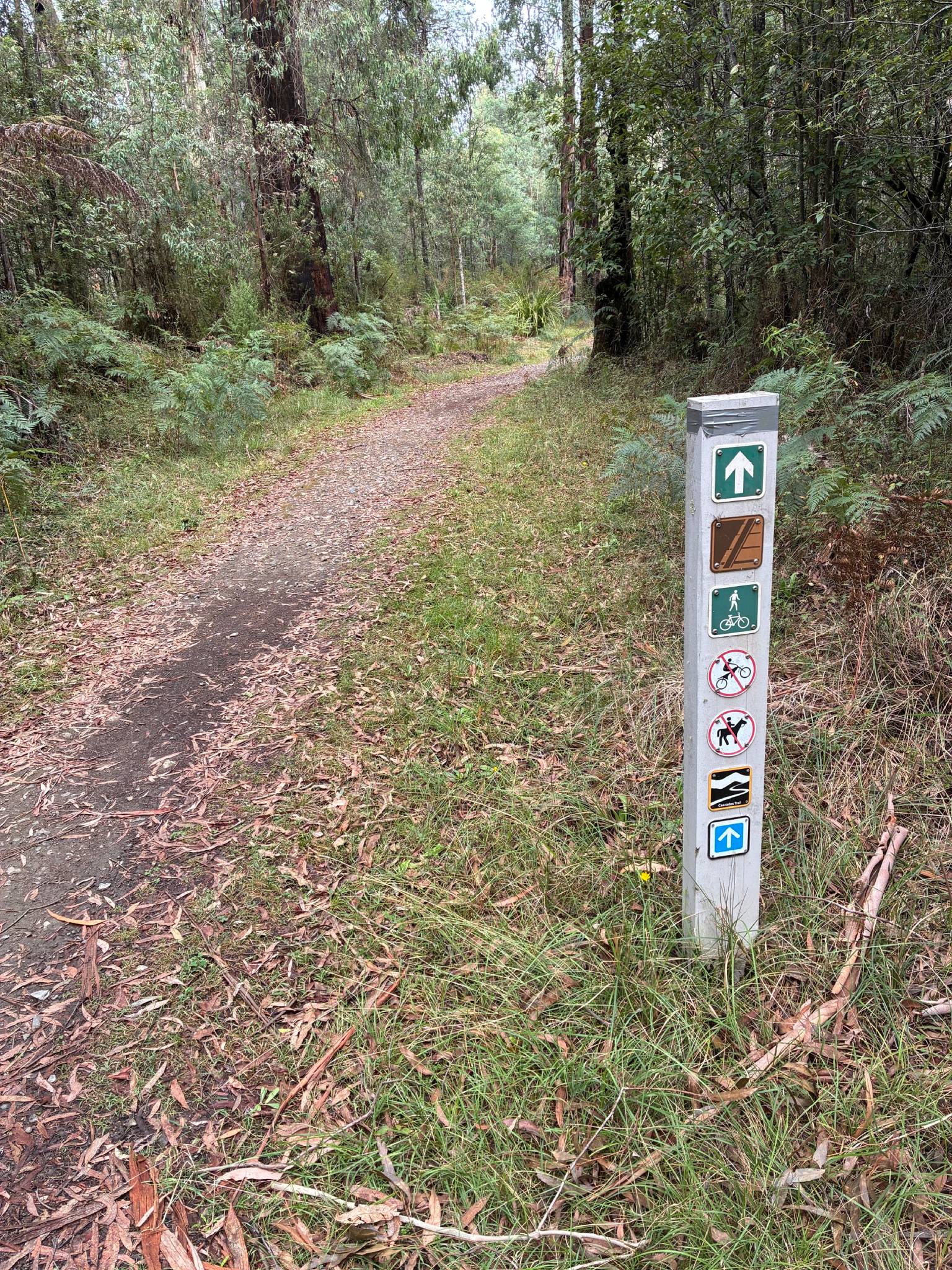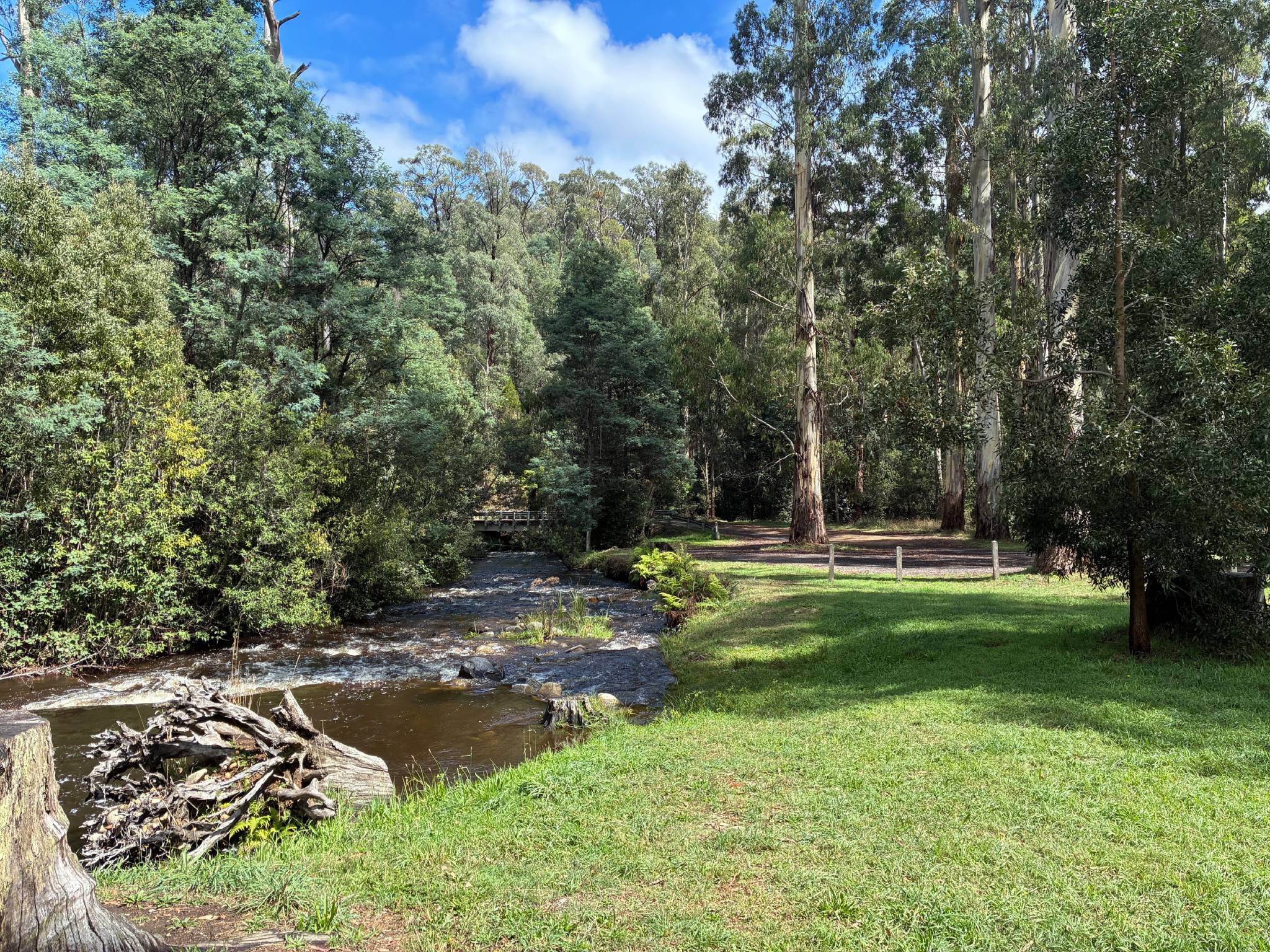
Marysville, Victoria
Testing the feasibility of a 100+ km mountain bike network and establishing a pathway from concept to investment
Murrindindi Shire Council had an ambitious vision for a connected mountain bike trail network at Marysville. The fundamental question was whether that vision was feasible and what would be required to turn it into a deliverable investment proposition.
The transition away from native timber harvesting in the region has created a broader need for new economic opportunities across the region.
Council’s Beyond the Black Spur tourism initiative identified mountain biking as one potential contributor to supporting the transition, building on previous trail planning undertaken for Marysville.
Blue Sky Trails was engaged to undertake a feasibility study and business case to test the proposed trail network and establish the evidence required to inform Council’s future investment decisions.
The Challenge
The project was significantly more complex than determining whether there was enough land or suitable terrain to develop additional trails.
Council needed to understand whether a connected 100+ km network was technically, economically and financially feasible, how the network could be delivered in stages, and what supporting infrastructure, governance, and funding arrangements would be required.
The assessment also needed to consider how mountain biking could contribute to broader tourism and economic development objectives, while establishing a realistic pathway from previous strategic planning through to project delivery.
The challenge was therefore to bring these different considerations together into a clear investment proposition.
Our Approach
Blue Sky Trails worked with Murrindindi Shire Council and Ride Marysville through a structured feasibility assessment undertaken over 12 weeks.
The assessment brought together trail planning, economic analysis, financial feasibility, construction costs, governance, supporting infrastructure, staging and potential funding pathways.
Rather than assessing these elements independently, the feasibility study considered how they interacted.
The proposed trail network was tested against likely market demand and visitor outcomes.
Indicative construction and infrastructure costs were developed to understand the scale of investment required.
Governance and operating models were considered alongside the capacity required to manage the network over the longer term.
Potential funding pathways and staged delivery options were then assessed to establish how the broader network vision could realistically progress.
From Vision to Investment Pathway
A large trail network concept can be compelling, but scale alone does not establish feasibility.
The study progressively tested the key questions that needed to be answered before significant investment could be considered:
- Is there a market?
- Is there a viable trail network?
- What economic outcomes could it generate?
- What will it cost?
- How should it be delivered?
- How will it be governed and managed?
- How could it be funded?
Together, these assessments provided Council with a clearer understanding of both the potential of the network and the requirements for delivering it.
The resulting business case consolidated the findings into an investment-focused document that could support Council decision-making, funding discussions and future investment opportunities.
The Outcome
The feasibility study confirmed a potential pathway for development of a connected 100+ km mountain bike network and established a staged approach to its delivery.
Economic analysis provided evidence of the potential visitor economy benefits associated with a mature network, while indicative construction costs established the likely scale of investment required.
The work also identified potential governance models, supporting infrastructure requirements and funding pathways, giving Council a more complete understanding of what would be required beyond trail construction alone.
Importantly, the study provided a basis for moving from strategic aspiration towards defined projects and future investment.
Why This Matters
Feasibility is about more than demonstrating that a trail network can be built.
For major destination-scale trail projects, the stronger question is whether the proposed network can generate sufficient value to justify investment and whether there is a realistic pathway to fund, deliver and manage a trail network over the long term.
The Marysville project brought those questions together.
By connecting trail planning, market demand, economic outcomes, costs, governance, staging and funding, the feasibility study gave Council an evidence base for determining how a 100+ km network could progress from a strategic vision towards an investable and deliverable project.